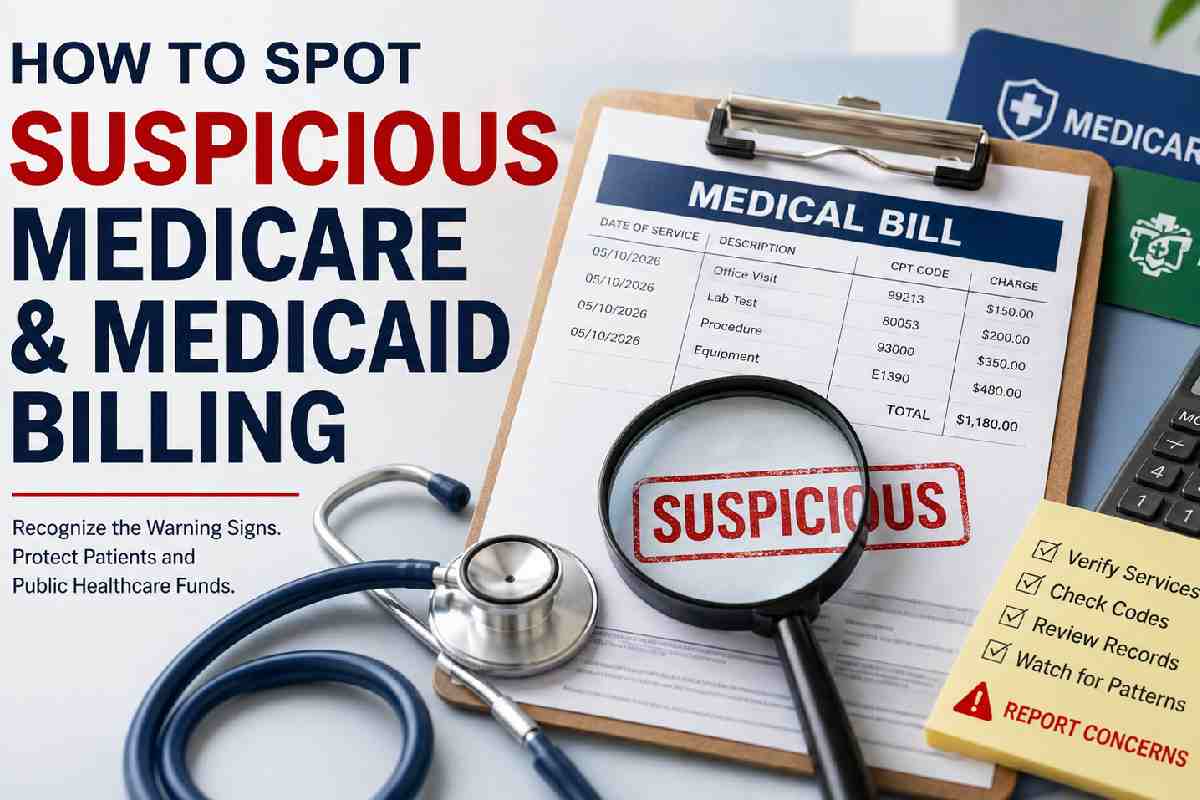
Medicare and Medicaid billing can be complicated, with different procedure codes, coverage rules, providers, and claim systems involved. Still, patients, caregivers, healthcare employees, and compliance teams can often identify inconsistencies. A Medicare fraud whistleblower may help explain why details such as dates of service, treatment notes, and billing codes can matter when a concern appears to be more than a simple mistake.
Careful review protects patients, honest providers, and public healthcare funds. The goal is not to decide whether someone committed a crime based on a single confusing statement. It is to recognize unusual billing, accurately document the discrepancy, and direct the concern through the appropriate channel.
Table of Contents
Why Billing Review Matters
Medicare and Medicaid process an enormous number of claims for office visits, hospital care, prescriptions, therapy, testing, transportation, equipment, and home health services. A single incorrect claim can result from a data-entry problem or coding confusion. However, the same issue repeated across many patients, locations, or dates can indicate a deeper problem.
Improper billing can involve fraud, waste, or abuse. These terms are related, but they do not mean the same thing. Describing the facts instead of applying a legal label helps investigators, insurers, and compliance personnel evaluate the situation fairly.
Fraud, Waste, And Abuse Are Not The Same
- Fraud generally involves knowingly using false information or deception to obtain payment.
- Waste involves inefficient or unnecessary spending that may occur without deliberate deception.
- Abuse involves practices that fall outside accepted medical, business, or billing standards.
For example, a clinic might accidentally submit the wrong code once. That error should be corrected, but it is not necessarily fraud. A pattern of altering records to support higher-paying codes is a much more serious concern.
Common Warning Signs In Medical Billing
Claims deserve a closer look when they show services that do not match what the patient received or what the medical record supports. Warning signs can include:
 Charges for appointments when the patient was absent or out of town.
- Repeated billing for the same test, visit, supply, or treatment.
- High-level procedure codes are used for nearly every patient.
- Medical equipment was ordered without an apparent clinical need.
- Services were billed under a provider who did not participate in the care.
- Copied, incomplete, or inconsistent notes are used to support claims.
- Referrals associated with gifts, cash, free services, or sham consulting work.
Upcoding And Unbundling
Upcoding
Upcoding means billing for a more expensive service than the care actually provided. For instance, a basic office visit may be billed as a complex visit even though the documentation reflects limited evaluation and treatment. One unusual code may be explainable, but routine use of the highest-paying code can be a warning sign.
Unbundling
Unbundling occurs when related services that should be billed together are separated into multiple claims to increase payment. Comparing billed services with the patient record and the payer’s billing rules can help determine whether the codes align with the care delivered.
Ghost Billing And Services Not Provided
Ghost billing is the practice of submitting claims for care, equipment, treatment, or supplies that were never provided. A patient may spot it by comparing a statement with calendars, receipts, appointment reminders, travel records, or personal notes. Keep the original document and write down the exact date, provider, and service that appears incorrect. A missing or inaccurate claim alone does not establish intent, but it should not be ignored.
Unnecessary Services And Questionable Referrals
Medically unnecessary tests, procedures, prescriptions, or durable medical equipment can expose patients to needless risk while increasing program costs. Referral relationships also deserve attention when financial rewards seem to drive decisions. Paid speaking work, unusual consulting agreements, or free items connected to referrals may warrant review, although not every financial relationship is improper.
How To Review A Claim Carefully
- Read the explanation of benefits, itemized statement, or Medicare Summary Notice.
- Check the patient name, provider, location, date, and service description.
- Compare the claim with appointment records, treatment notes, and personal records.
- Identify duplicate charges, unfamiliar services, or codes that seem unusually high.
- Write down questions without changing the original documents.
- Request clarification from the provider or payer when an ordinary correction may resolve the issue.
What Employees And Data Reviews May Reveal
Billing personnel may notice recurring code changes or unusually high volumes of claims submitted. Clinicians may see charges that do not match patient conditions or care plans. Administrative staff may face pressure to sign incomplete records, while compliance teams may identify rapid growth in high-value claims or concentrated referral patterns.
For example, if a clinic bills the same high-level visit code for nearly every patient, one claim could be an error. If internal notes repeatedly describe short, routine encounters, the sustained mismatch deserves closer review. Federal program-integrity teams also use data analytics to compare billing activity and identify outliers that may need further investigation.
How To Document And Report A Concern
Record names, dates, locations, claim numbers, billed services, and the reason each item appears questionable. Separate firsthand knowledge from rumors, maintain a clear timeline, and use approved workplace or legal channels for records. Do not alter files, access information without authorization, remove original documents, or share protected patient information unnecessarily.
Avoid exaggerating a suspected loss, guessing about motives, posting accusations online, or confronting someone if doing so could create a safety or employment risk. Reporting routes vary by program and state. When appropriate, individuals can use the HHS Office of Inspector General process to report fraud, waste, and abuse involving Medicare, Medicaid, and other HHS programs. Keep a copy of the information submitted and note the submission date.
Questions Readers Commonly Ask
Does A Billing Error Automatically Mean Fraud?
No. Training issues, software errors, and coding confusion can lead to mistakes. Repetition, intent, documentation, and the response after correction all matter.
Can A Patient Report A Suspicious Charge?
Yes. Patients and caregivers can report charges they do not recognize by explaining the specific facts and providing available records.
What If An Employee Fears Retaliation?
Keep a factual record, learn the available reporting process, and consider qualified advice before taking steps that could affect employment or privacy rights.
Conclusion: Focus On Facts And Patterns
Careful billing review is not about rushing to judgment. It is about noticing discrepancies, preserving accurate information, and recognizing when a repeated pattern may need an independent review. Clear, timely, fact-based reporting can help distinguish a routine billing error from conduct that puts patients and public funds at risk.