
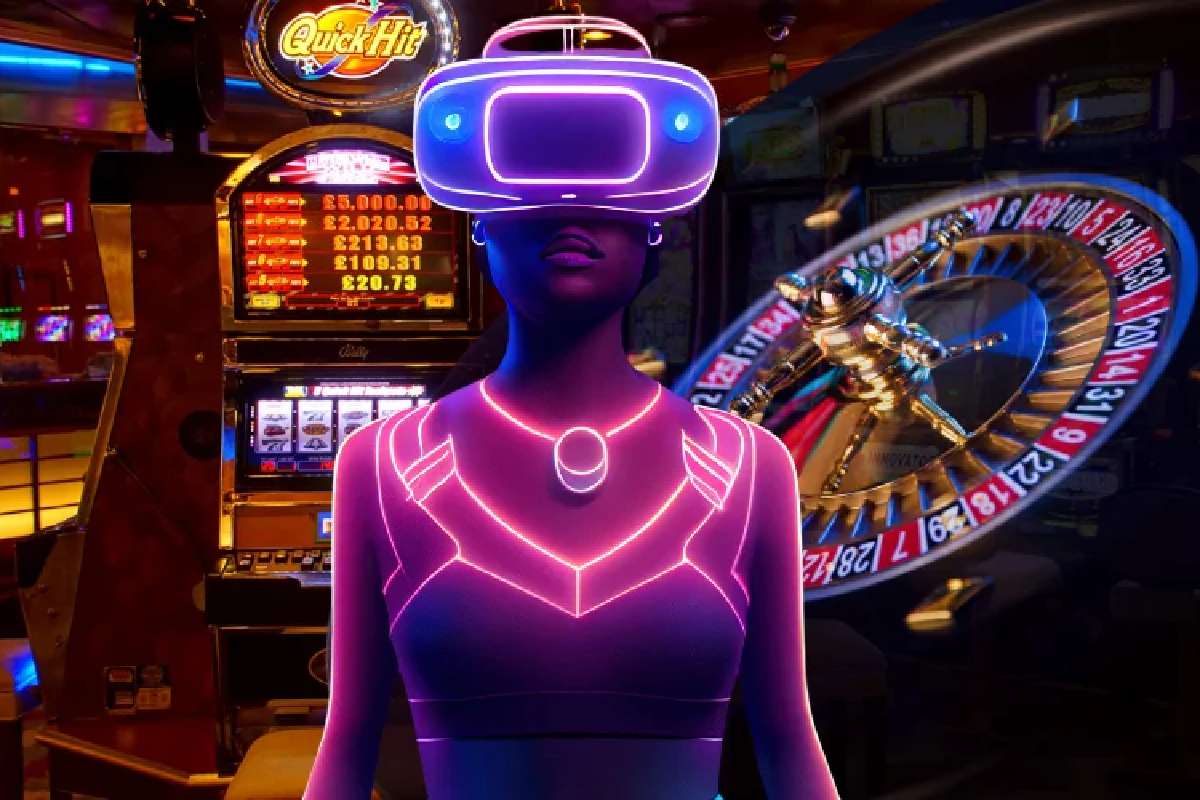
The online gambling industry is moving fast, with live dealers, virtual reality headsets, and artificial intelligence all competing for players’ attention. Romanian players living across Europe are watching these developments closely, but not all innovations will stick. Some technologies are already reshaping how people gamble online, while others remain expensive experiments that most operators aren’t ready to roll out.
Today, many technologies already exist and are actively tested by the casinos. But which will be used regularly, and which will remain niche novelties? Platforms tracked by review sites like cazinou.org show that adoption rates vary wildly depending on the technology, with live casino games showing steady growth while VR remains largely experimental. Below are a few predictions on what 2026 might look like for Romanian players abroad.
Table of Contents
Live Casino Games Are Already the Standard
Live dealer games have moved from novelty to expectation. Evolution Gaming, Pragmatic Play Live, and Ezugi now power thousands of tables across licensed operators, streaming real dealers from studios in Latvia, Romania, Malta, and Georgia.
Romanian-speaking dealers are available at multiple studios, though most games still run in English with multilingual chat support.
The trend is backed by numbers:
- Market dominance: Evolution Gaming controls roughly 70% of the live casino market in Europe, with over 15,000 concurrent tables during peak hours.
- Growth trajectory: The live dealer segment grew 38% year-over-year in 2024, far outpacing slots or traditional table games.
- Game variety: Beyond blackjack and roulette, studios now offer game shows like Crazy Time, Football Studio, and Monopoly Live, which combine gambling with entertainment formats.
Romanian players living in Germany, the UK, Spain, or other regulated markets find live casino options on nearly every licensed platform. The technology is stable, the costs are manageable for operators, and the experience feels closer to land-based gambling than software-generated games.
Why Live Casino Works
The appeal is straightforward: players see real cards dealt and real wheels spun, which builds trust that RNG-based games struggle to match. The social element — chatting with dealers and other players — adds a layer of interaction that automated games can’t replicate.
VR Casinos Remain a Distant Possibility
Virtual reality casinos exist, but they’re not catching on. SlotsMillion VR launched in 2015, and a handful of other operators have experimented with VR poker rooms and slot arcades. The problem isn’t the technology — Meta Quest 3 and PlayStation VR2 deliver solid experiences — it’s the friction involved in actually using them.
The barriers are real:
- Hardware costs: A decent VR headset costs €300–€500, which most casual gamblers won’t spend just to play casino games.
- Setup hassle: VR requires space, setup time, and comfort with technology that many players don’t want to deal with for a gambling session.
- Limited content: Only a tiny fraction of casino games work in VR, and most major operators haven’t invested in VR platforms.
Some Romanian players might try VR casinos out of curiosity, but it’s unlikely to become a mainstream option in 2026.
AI Is Already Changing Things Behind the Scenes
Artificial intelligence isn’t as visible as VR headsets, but it’s already reshaping online gambling. Operators use AI for fraud detection, responsible gambling monitoring, and personalized game recommendations. These applications work quietly in the background, improving security and user experience, without any participation from the players
Current AI applications in online gambling:
- Fraud prevention: Machine learning algorithms analyze betting patterns to flag suspicious accounts and prevent bonus abuse.
- Responsible gambling tools: AI monitors player behavior for signs of problem gambling, triggering cooling-off periods or deposit limit suggestions.
- Customer support: Chatbots handle basic queries instantly, while complex issues get routed to human agents.
For players, this means safer platforms and faster support responses.
What AI Won’t Replace
Despite the hype, AI isn’t generating new games or replacing live dealers. Game studios still employ human designers, and live casino tables still need real people dealing cards. AI assists with operations and compliance, but it doesn’t fundamentally change what gambling looks like from the player’s perspective.
In conclusion, one should recall that technologies that work are the ones that solve real problems without creating new friction. Live dealers solved the trust issue with online table games. AI is solving fraud and compliance challenges. VR is still looking for a problem it can solve better than existing solutions.