
Control, uniformity, and attention to detail are part of high-precision manufacturing. A poor-quality weld may destroy a healthcare instrument, break a component of an aircraft, or reduce the lifespan of an electronic appliance. This is why most factories do not consider the simplest means of joining. Instead, they resort to more advanced welding systems, which safeguard quality and save time and material.
Table of Contents
The Importance of Precision Welding
Laser Welding Solutions in this environment have now emerged as a potent option for companies requiring narrow weld seams, low heat distribution, and repeatability. They assist manufacturers in assembling minute or small parts without exerting excessive pressure on the surrounding surfaces or internal finishes. This is most important in industries where a single malfunction can lead to a bad test, a disrupted production line, or a safety concern.
Squeezing a part together is not precision welding. It is also concerned with delivering the final work that is clean enough to be scrutinized.
How Laser Systems Improve Results?
Laser systems are unique in that they concentrate the energy over a very limited area. That narrow concentration allows rapid welding of thin metals and small parts, which could bend or be discolored by a broader heat field. It also allows engineers greater control over penetration depth, seam appearance, and process speed, helping maintain consistent production during extended runs.
Flexibility on the shop floor is another key benefit. A laser system can perform small-scale repair jobs, small-scale custom work, and mass production, requiring fewer tools to be replaced than in most contact-based processes. It is handy when manufacturers serve multiple markets simultaneously, particularly when designs change frequently, and customers desire quick lead times.
Practical Benefits on the Factory Floor
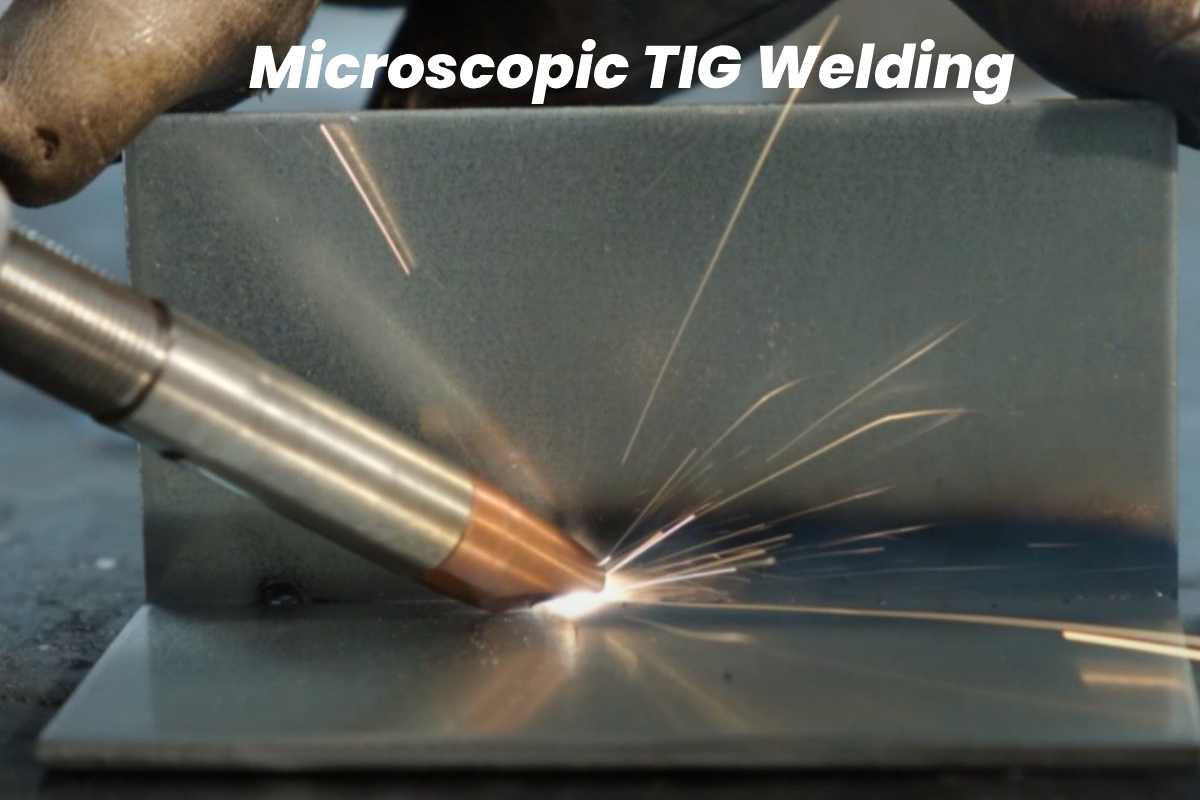
Precision welding is not only beneficial in technical charts but also in everyday life. As the quality of the weld becomes more predictable, planning becomes easier. There are no scraps, and the customer learns to trust better because deliveries come on time. This is also why even Microscopic Tig Welding counts.
- Improved weld accuracy eliminates the necessity of post-joining touch-offs.
- Reduced thermal power will shield components nearby, as in small assemblies or delicate equipment.
- Increased cycle time may enable throughput, with the shop not having to compromise quality.
Where Microscopic Work Makes a Difference
Certain jobs still require a human hand for the magnification required. The technique is particularly applicable in fine repair, micro-joining, mold work, and part restoration, where it is necessary to consider and manage a very small weld size. The technician will be able to recreate material with an impressive degree of precision due to the clear view of the weld area.
It is useful in cases where the part is too costly, specialized enough, or too small to be removable. Rather than scraping away a broken part of a mold insert, medical part, sensor housing, or jewelry tool, a technician can repair the area with clean, specific weld work. That extends the lifespan of assets that would otherwise be challenging to repair with the utmost confidence.
Choosing the Right Method for the Job
The precision production process is most effective when firms determine the welding strategy based on part design, material type, production quantity, and inspection requirements. Fine production pieces may be better served by laser welding, with faster speeds, greater repeatability, and minimal heat dispersion. But repair, access, and ultra-precise micro-level TIG work may be preferred. The smartest manufacturers do not view these approaches as competitors. That is because they can fix many issues within the same workflow.
When a supplier is familiar with both styles, they can provide guidance on product development. The assistance helps engineers create parts that can be welded directly, actively examined, and more reliable in operational environments.
Training, Process Control, and Future Growth
Technology alone does not produce great welds. Even today, skilled operators are necessary if a company wants to produce non-variable parts. The training and inspection are separate steps. However, the best results occur when they form a single system.
As machines become smaller and more complex, this trend will continue. The manufacturers will require methods of joining that contribute to miniaturization without increasing defect rates. Technical requirements continue to increase. So, companies investing in accurate welding capacity now will find themselves in a better position to handle the growing industrial sector.
Conclusion
In conclusion, the future of precision manufacturing lies in the processes of collaborating with materials carefully. The laser systems introduce efficiency and reliability to finer production work. At the same time, the microscopic TIG techniques add repair value where it counts most. As soon as businesses know where each approach works better, they will not just be able to create more robust components. They will also minimize waste and produce the quality that contemporary buyers demand.